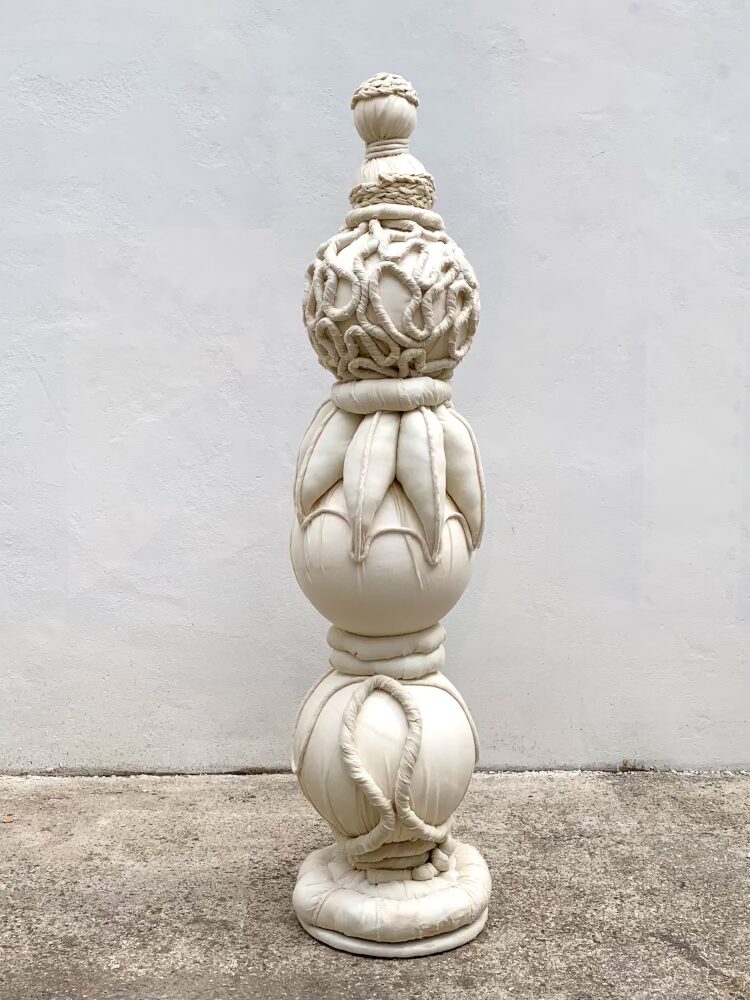
The piece is presented as a vertical textile sculpture, formed by a succession of overlapping volumes that create a totemic structure. Its surface is completely covered in soft, off-white materials, which accentuates the visual unity of the whole.
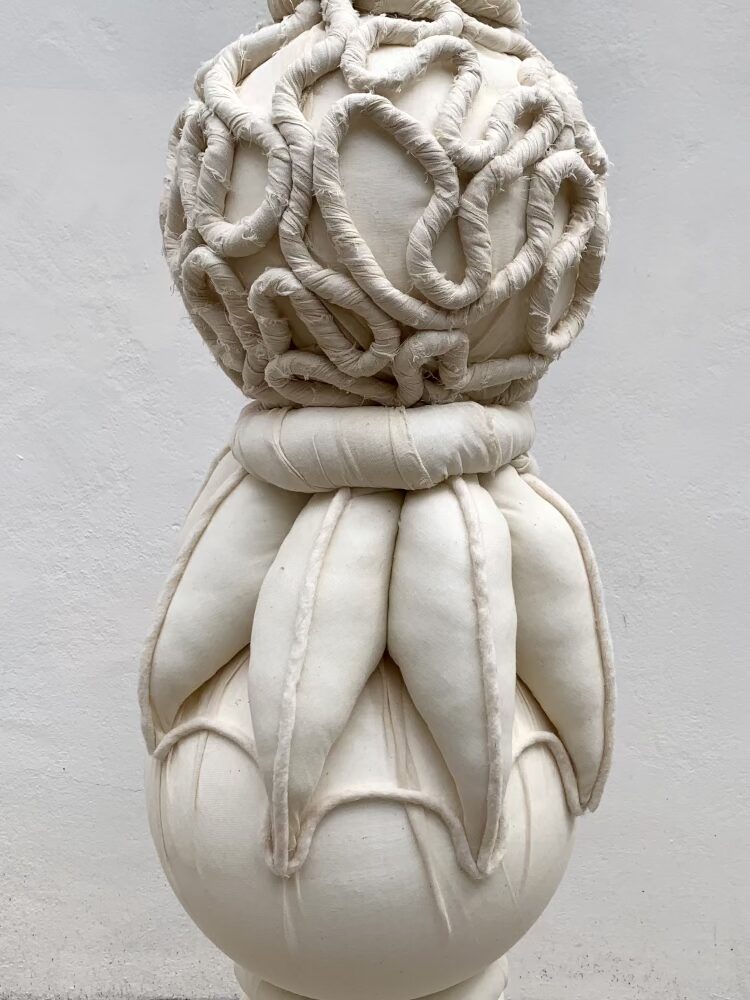
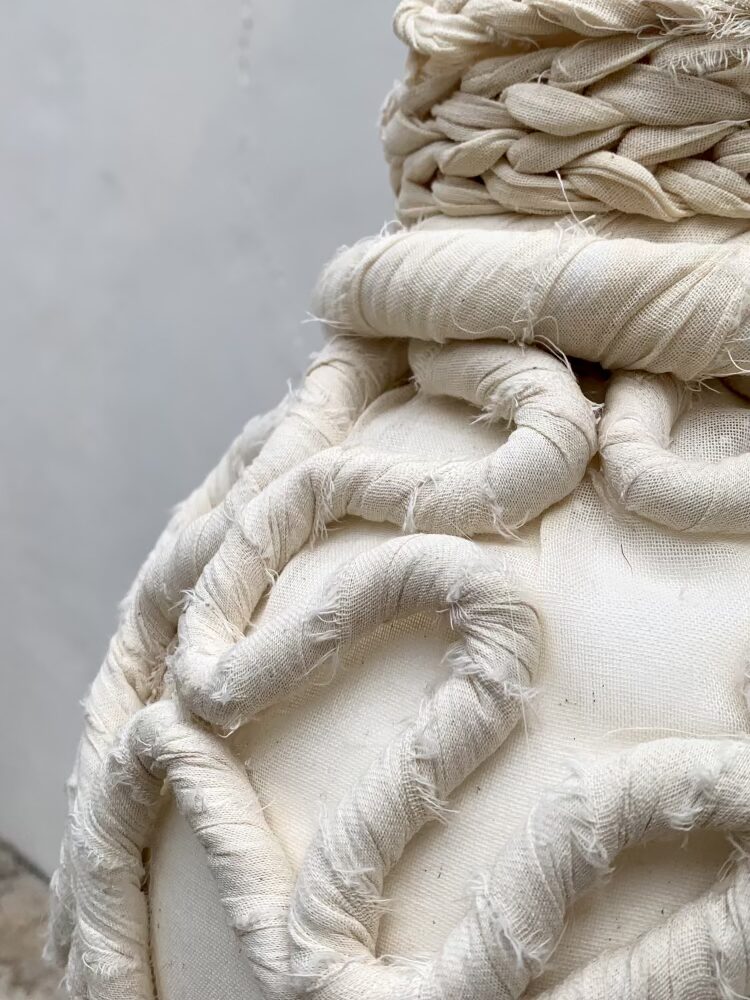
The main body is composed of three spherical modules of varying proportions, connected by textile rings that wrap around each joint. The upper sphere is covered by a network of cords and strips that intersect in various directions, creating a complex relief. The central volume incorporates fragments that extend downwards from the body, like petals or organic growths. The lower sphere is surrounded by thick textile ribbons that curve and adhere to its surface.
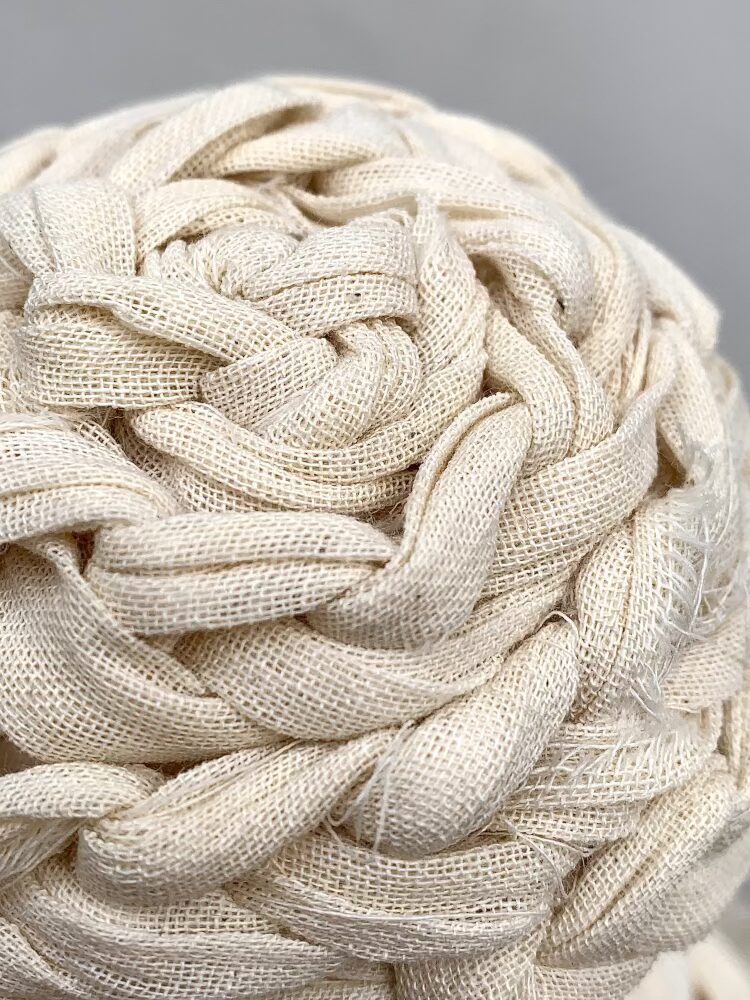
The piece is finished at the base with a reinforced textile disc that stabilizes the structure and, at the top, with a finial composed of several stacked forms that culminate in a small, rounded element. The entire piece maintains a solid appearance despite the softness of the material used, lending the work a sculptural character and a dominant vertical presence in the space.
Upright, solitary, and attentive, this textile form rises like a watchful presence. A soft architecture that, without resorting to the hardness of stone or metal, asserts itself vertically as if upholding an ancient pact with the sky. Totem is constructed in layers: spheres stacked upon one another, knots that speak in silence, ribbons intertwined like memories that refuse to let go.
Each section possesses its own rhythm, yet all ascend in the same direction: an upward impulse that defies the fragility of the material. Its whiteness does not allude to purity but to the power of the latent, to that which can still be named. The fiber protects and simultaneously reveals, like a skin that guards what matters and lets what breathes show.
The piece stands as a symbol, not inherited, but invented from the tactile memory of making.
A totem that represents neither animals nor gods, but rather the power of the human gesture that, through repetition, knotting, and wrapping,
conveys the desire for permanence.
Here, textiles become ritual: a sewn prayer, a soft monument that doesn’t need to shout to be heard.